
 English
 Español
 Portugues
 Pусский
 Français
 Deutsch
 日本語
日本語 한국어
한국어 العربية
 Italiano
 Nederlands
 Polski
 ไทย
ไทย Türk dili
 हिन्दी
 Indonesia
 Melayu
 čeština
 Română
Cryogenic control valve
A cryogenic control valve is a specialized valve designed to regulate the flow of very cold fluids, typically at temperatures below -150°C (-238°F). It is widely used in industries that handle liquefied gases such as liquefied natural gas (LNG), liquid nitrogen, liquid oxygen, liquid argon, and other low-temperature media. Because these fluids are stored and transported at extremely low temperatures, the valve must maintain reliable performance while preventing leakage, material embrittlement, and safety hazards.The main function of a cryogenic control valve is to precisely control flow, pressure, or level in a cryogenic system. It can operate in on-off or throttling applications, depending on the process requirements. In many cases, the valve is used to maintain stable system conditions, ensure safe transfer of cryogenic liquids, and protect downstream equipment from pressure surges or abnormal operating states.Cryogenic control valves are built with special materials that can withstand thermal contraction and low-temperature stress. Common body materials include stainless steel and other alloys with excellent toughness at low temperatures. Internal components such as trim, stem, and seals are also selected carefully to ensure durability and tight sealing performance. Extended bonnets are often used to keep the packing area away from the cold fluid, reducing the risk of freezing and allowing the stem packing to function properly at ambient temperature.A key design feature of cryogenic control valves is the extended bonnet or neck. This structure creates a thermal barrier between the cold process medium and the valve actuator or packing system. It helps prevent condensation, ice formation, and damage to moving parts. Some valves also use special low-temperature packing materials and reinforced seat designs to improve reliability and reduce maintenance needs.Cryogenic control valves may be operated manually, pneumatically, or electrically, but pneumatic actuators are often preferred in automated process systems. In automated plants, these valves work with sensors and control systems to manage flow accurately and respond quickly to process changes. Their stable control performance is essential for applications such as LNG plants, air separation units, gas storage tanks, and biomedical or laboratory systems.Safety is one of the most important considerations in cryogenic valve applications. Any leakage of cryogenic fluid can cause severe cold burns, rapid vapor expansion, oxygen enrichment, or fire and explosion risks depending on the medium. Therefore, cryogenic control valves are designed and tested to meet strict sealing, pressure, and temperature standards. High-quality manufacturing, proper installation, and regular maintenance are necessary to ensure long-term safe operation.In summary, a cryogenic control valve is an essential component in low-temperature fluid handling systems. It combines precise flow control, low-temperature resistance, and high sealing reliability. With its specialized design and materials, it supports safe and efficient operation in demanding cryogenic applications across many industries.
Sản phẩm
Danh mục:
-
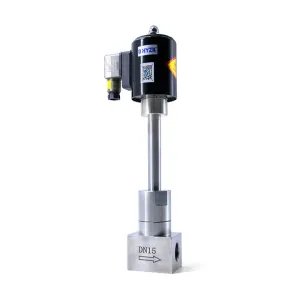
Cryogenic solenoid valve
Phân loại của họ: Solenoid ValveLượt xem: 572Số:Thời gian phát hành: 2026-10-23 14:57:13Nominal Diameter: DN6~25
Applicable Media: Liquid nitrogen, liquid oxygen, liquid hydrogen, liquefied natural gas, and other cryogenic media
Applicable Pressure: 0~1.6MPa, 0~2.5MPa, 0~4.0MPa, 0~4.0MPa
Tin tức
Danh mục:
Không có kết quả tìm kiếm!
Trường hợp
Danh mục:
Không có kết quả tìm kiếm!
Video
Danh mục:
Không có kết quả tìm kiếm!
Tải về
Danh mục:
Không có kết quả tìm kiếm!
Tuyển dụng
Danh mục:
Không có kết quả tìm kiếm!
Sản phẩm được đề xuất
Không có kết quả tìm kiếm!



 Whatsapp
 Điện thoại